
Cervical Polyps

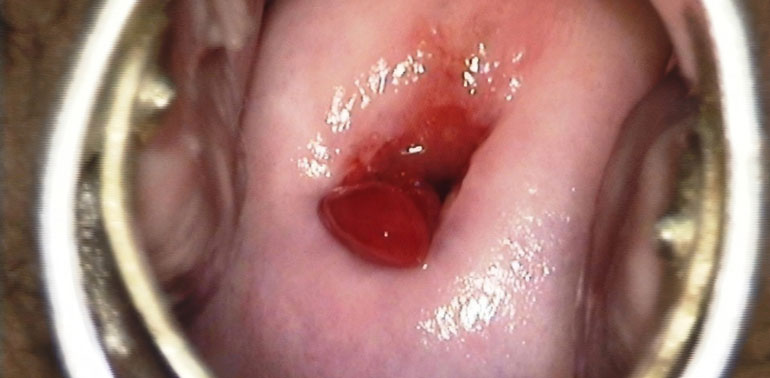
Cervical Polyps
A pathological growth extending toward the uterine cavity — often detected during routine examinations, sometimes increasing the risk of bleeding and infection.
Cervical polyps are pathological growths that develop from the mucosa and extend toward the uterine cavity. They are often detected during routine gynecological examinations. Although they may be small and asymptomatic, in some cases they can increase the risk of bleeding, discharge and infection. Their formation can be linked to hormonal imbalance (especially an increase in estrogen), chronic inflammatory processes, traumas and postpartum changes, HPV (human papillomavirus), as well as endocrine disorders and immune weakness. Polyps are usually benign, but in some cases they can be confused with dysplasia or precancerous changes; for this reason, timely examination and intervention are important.
Symptoms
- Bleeding after intercourse
- Bleeding between menstruations
- Unusual vaginal discharge
- In some cases, a feeling of discomfort in the lower abdomen
- Often gives no symptoms and is detected only during examination
When to see a doctor
You should see a doctor if you have recurrent bleeding after intercourse or between menstruations, unusual discharge, or persistent discomfort in the lower abdomen. Even without symptoms, a polyp found during examination should be removed for histological assessment, so regular gynecological check-ups are recommended.
Diagnostics
The diagnosis is made by directly seeing the polyp during a gynecological examination, together with colposcopy and ultrasound. When necessary, a Pap smear is performed to rule out dysplasia or precancerous changes, and every removed polyp is sent for histological examination.
Treatment
The main treatment is surgical removal of the polyp — this is usually performed as a simple outpatient procedure under local anesthesia; the base of the polyp is cut and removed, and the tissue is sent for histological (pathological) examination. Every removed polyp must undergo laboratory examination; this is important to confirm that it is benign and to assess the risk of progression to cancer. If inflammatory or hormonal factors are involved in the formation of the polyp, additional drug treatment (hormonal preparations, antibiotics, etc.) may be applied. After the polyp is removed, regular gynecological follow-up, Pap smear and ultrasound examinations are recommended to reduce the likelihood of recurrence.
Frequently asked questions
Is a cervical polyp dangerous?
Polyps are usually benign and most often safe. However, because in rare cases they can be confused with dysplasia or precancerous changes, every removed polyp is sent for histological examination.
Can a polyp recur after removal?
Yes, a polyp can recur, especially if hormonal imbalance or inflammatory processes persist. For this reason, regular gynecological follow-up and ultrasound examinations are recommended.
