
Endometrial Polyp

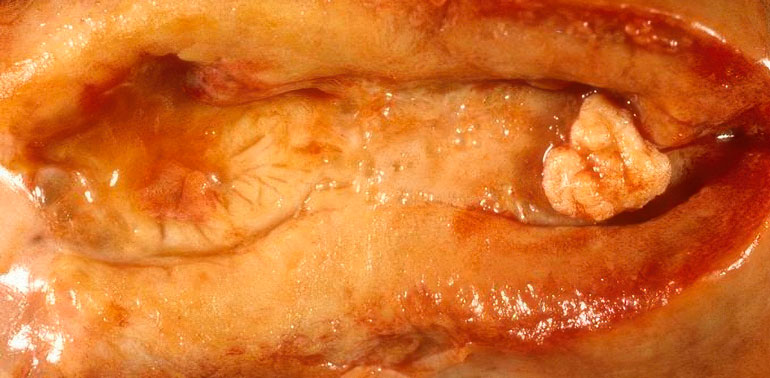
Endometrial Polyp
A benign growth developing from the endometrium toward the uterine cavity — most often observed in women over 35 years of age.
An endometrial polyp is a benign growth that develops from the endometrial layer of the uterus toward the uterine cavity. Although it can occur at any age, it is more often observed in women over 35 years of age, when hormonal changes are intense. Polyps can be single or multiple, and sometimes can persist for a long time without giving any symptoms. Their formation can be linked to an increase in the hormone estrogen, hormonal imbalances, chronic inflammatory processes, long-term use of certain drugs (especially tamoxifen), as well as obesity and endocrine disorders.
Symptoms
- Bleeding between menstruations
- Prolonged or irregular menstruation
- A feeling of heaviness in the lower abdomen
- Infertility or difficulty getting pregnant
- Bleeding after intercourse
When to see a doctor
You should see a doctor if you have bleeding between menstruations, prolonged or irregular menstruation, or difficulty getting pregnant. Especially if bleeding occurs during menopause or a thickened endometrium is found on ultrasound, you should consult a doctor without losing time.
Diagnostics
The diagnosis is made mainly by ultrasound — some polyps give no symptoms and are discovered incidentally during an ultrasound examination. To assess the uterine cavity more precisely, hysteroscopy is performed, and the removed polyp is sent for histological examination to confirm the diagnosis.
Treatment
The most effective method for removing endometrial polyps is hysteroscopic polypectomy — during this procedure the uterine cavity is visually assessed by means of a hysteroscope, and the polyp is removed with special instruments. The removed polyp must be sent for laboratory (histological) examination; this is important to confirm whether the growth is benign. To prevent recurrence of the polyp, in some cases hormonal drugs may be prescribed by the doctor. After the polyp is removed, regular gynecological examinations and ultrasound follow-up help to prevent the risk of recurrence.
Frequently asked questions
Can an endometrial polyp turn into cancer?
Endometrial polyps are benign in most cases, but rarely they can progress to cancer. Especially in the case of bleeding after menopause, histological examination of the removed polyp is important to assess this risk.
Does a polyp always have to be removed?
Removal is usually recommended for polyps that cause symptoms, are large, or are detected after menopause. Small, asymptomatic polyps may be kept under observation at the doctor's discretion.
